


Community Spotlight: Designing for Real-Time Collaboration in Interior Architecture
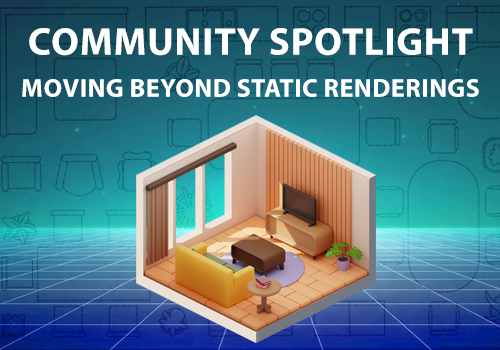 One of the most valuable sources of feedback for Apex Engine has always come from the people who use interactive tools to communicate ideas to real clients. This month, we are highlighting an interior architectural designer and firm we have worked with previously, who are now actively helping shape how Apex Engine’s tools evolve.
Their work sits at the intersection of design, visualization, and client communication. That perspective has been especially important as Apex Engine continues to move beyond static workflows and toward real-time, collaborative environments.
Moving Beyond Static Renderings
Traditional interior design workflows often rely on a long back-and-forth cycle. Renderings are created, shared, revised, and recreated. Even small changes can require new exports, new files, and new approvals.
What immediately stood out to this team was the ability to invite clients directly into a live 3D environment without compiling or distributing a separate client executable. Instead of exchanging static images, clients can log in, explore the space, and discuss changes together in real time.
That shift alone changes the relationship between designer and client. Feedback becomes immediate. Decisions become clearer. The design process becomes collaborative rather than transactional.
Tools They Use Today
Like many interior architecture firms, this team currently relies on Unreal Engine primarily for high-quality renders and visual output. Unreal fits their current pipeline well for producing polished, presentation-ready imagery and static walkthroughs.
What excites them about Apex Engine is not replacing that capability, but extending it. They see Apex as the next step once designs move beyond visualization and into live collaboration. The upcoming MVP will allow them to begin sharing spaces with clients in real time, reducing the need for repeated exports, re-renders, and disconnected feedback cycles.
The ability to invite clients into a live environment, explore spaces together, and make changes on the spot represents a meaningful evolution in how they communicate and iterate. Unreal continues to serve their rendering needs today, while Apex Engine represents the future of collaborative, real-time design workflows.
That transition, from static visualization to real-time collaboration, is where they see the greatest long-term value.
What They Are Excited to Test Next
Looking ahead, this team is particularly excited about upcoming Python code assist capabilities.
While they have programmers on staff, many of their architects and designers are not traditional coders. The ability to use Python-assisted tooling to add interactive elements opens the door to a much wider group of contributors.
Examples they are eager to explore include animated doors, functional elevators and lifts, and other interactive architectural elements that traditionally require handoff to engineering teams. Enabling designers to make these changes themselves, in real time, is a major step toward more intuitive and inclusive tools.
Why This Matters
Interior architecture is a clear example of where real-time collaboration matters. These projects are not just about visuals. They are about experience, movement, and how people interact with a space.
By working closely with designers who operate in that reality every day, Apex Engine continues to refine tools that prioritize clarity, collaboration, and live iteration. Feedback from partners like this directly informs how features are shaped, simplified, and expanded.
This is exactly the kind of collaboration Apex Engine was built for.